
2. Architecture
JNEXT is one large object surrounded by three interchangeable shells. The
object is Emulator, and it is the entire emulated machine; the shells are the
Qt GUI, the SDL-only frontend and the headless runner, and each of them does
nothing but decide when to advance the machine and what to do with the picture
it hands back. This chapter is about that arrangement — how a process starts
and picks a shell, what the core owns and how its parts reach each other, what
happens during one frame, how pixels get to the framebuffer, and how the whole
machine is serialised so it can be rewound.
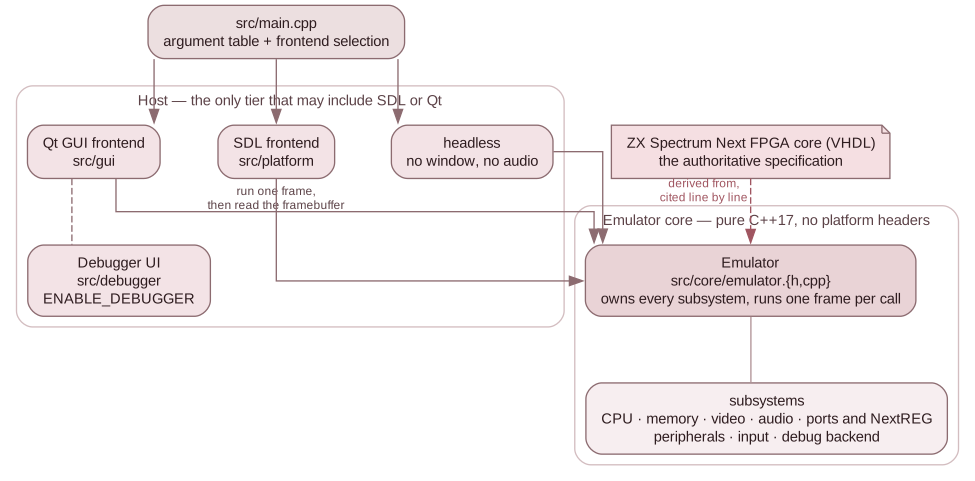
The frontends, the emulator core and its subsystems. Only the platform, GUI and debugger layers see SDL or Qt.
If you only read one page, read 2.3 A frame, end to end. It is the spine that the rest of the codebase hangs off: the order in which that one function does its work is the reason for most of the surprising code in the video, debug and rewind subsystems, and a good deal of it looks arbitrary until you have seen the sequence.
What is in this chapter
- 2.1 Startup and the frontends — argument parsing, SD-card resolution, and which of the three shells runs.
- 2.2 The emulator core — what
Emulatorowns, and how subsystems are wired to each other. - 2.3 A frame, end to end — one frame followed from the frontend's tick to the framebuffer it gets back.
- 2.4 The video pipeline — the layers, the compositor, and the per-scanline change-log replay.
- 2.5 Save state, rewind and determinism — state serialisation, the rewind ring, and what makes an automated run reproducible.